
Dental crowns and bridges are fixed restorations used to protect damaged teeth or replace missing ones. At Westlock Family Dental, treatment recommendations are based on individual clinical assessment, and patients are walked through findings, options, and expected timelines before any treatment begins.
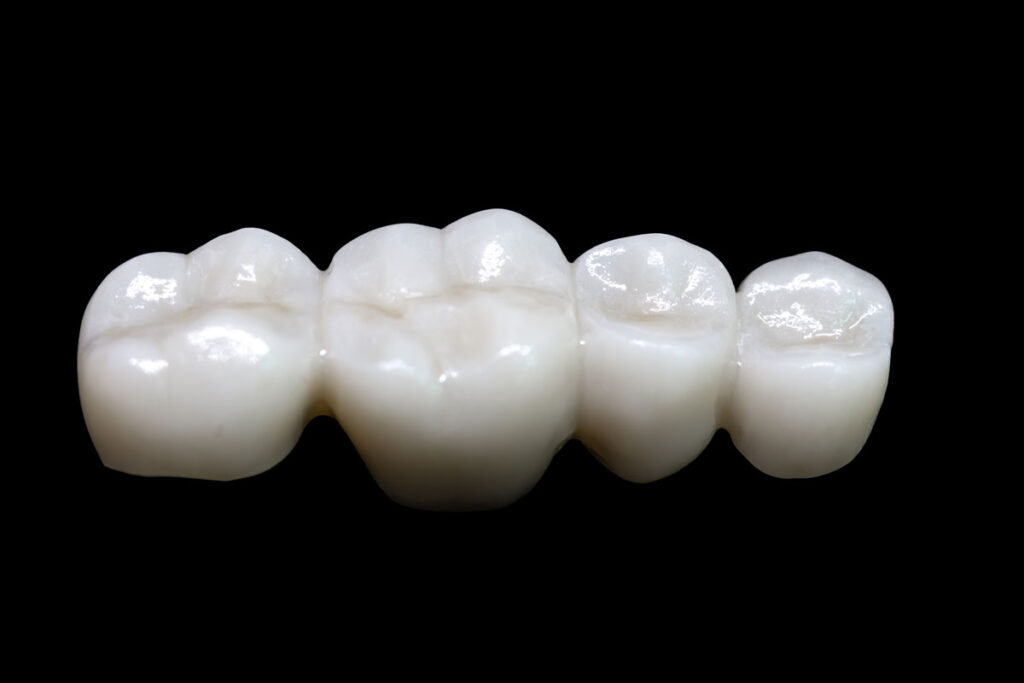
A dental crown is a restoration that fits over an existing tooth, covering it fully above the gumline. Crowns are typically used to protect a tooth that has been significantly weakened, damaged, or treated with a procedure such as root canal therapy. A crown may also be used to restore the shape, size, or function of a tooth where clinically appropriate.
A dental bridge is a fixed restoration used to replace one or more missing teeth. A traditional bridge is supported by the natural teeth on either side of the gap, which are prepared to receive crowns that anchor the bridge in place. The replacement tooth — referred to as a pontic — sits between the supporting crowns and fills the space left by the missing tooth.
Your dentist will discuss whether a crown, a bridge, or an alternative restoration is most appropriate based on your individual clinical situation.
Crown treatment may be considered in a number of clinical situations, which may include:
A dental bridge may be considered when one or more teeth are missing and the surrounding teeth are suitable to support a fixed restoration. Suitability is determined following a clinical assessment that takes into account the condition of the supporting teeth, the bone, and overall oral health.
Your dentist will review clinical findings, explain the recommended restoration, and discuss costs and timelines before treatment begins. If a bridge is being considered, the condition of the supporting teeth will be assessed as part of the planning process.
Crown and bridge treatment typically requires the tooth or teeth being restored to be prepared — this involves reshaping the tooth to accommodate the restoration. An impression or digital scan of the prepared tooth is taken and used to fabricate the final restoration. A temporary restoration is typically placed while the permanent one is being made.
Once the final crown or bridge is ready, it will be fitted, adjusted, and cemented in place. Your dentist will check the fit and your bite before the restoration is finalized. The number of appointments required may vary with the complexity of the treatment and individual clinical circumstances.
Crown and bridge treatment typically involves a minimum of two appointments — one for preparation and one for fitting. The length of each appointment may vary depending on the complexity of the case. Your clinic team can provide estimated timeframes when booking.
Following crown or bridge treatment, some patients may experience mild sensitivity in the restored area. This typically varies in duration depending on individual circumstances.
General aftercare considerations for crowns and bridges may include:
With appropriate care and regular dental visits, crowns and bridges may provide long-term function and support. Individual outcomes vary depending on clinical circumstances, oral hygiene, and ongoing maintenance.
Crown and bridge recommendations are based on individual clinical assessment. Your dentist will explain findings and available alternatives — including other restorative or replacement options — so you can make an informed decision about your care.
Not all teeth are suitable candidates for crowns or bridges. Suitability depends on the condition of the tooth, surrounding bone and tissue, and overall oral health. Your dentist will advise on the most appropriate course of action based on your specific situation.
Westlock Family Dental welcomes patients of all ages in Westlock, Alberta. If you have a damaged tooth or a gap you would like assessed, contact our team to book an appointment or ask any questions before your visit.